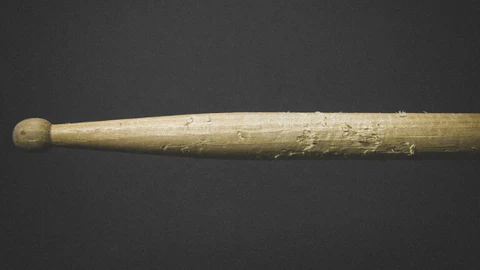
If you’re a purist like us, you’re probably here because you think the best chopsticks are made of wood. And we tend to agree with you.
Wooden mallets offer many advantages, such as their unique playing sensation, their ability to absorb vibrations and their flexibility.
However, there are so many wood options on the market that it’s easy to get lost. So, oak, maple, hickory (Chinese or American)… What’s the best wood to buy your chopsticks in?
The answer will depend very much on your preferences and expectations. Here are a few tips to help you make your choice.
Oak
Oak is, along with maple and hickory, one of the three main woods for chopsticks. It is generally appreciated for its strength and weight, as it is the heaviest option for wooden mallets.
Oak is ideal if you’re looking for good sound feedback while playing. It allows stronger strokes without requiring too much force.
However, it absorbs little vibration, which can tire your wrists and damage your cymbals over time. What’s more, its lack of flexibility makes it more likely to break on a bad blow, rather than bend like other types of wood.
Advantages :
- Satisfactory strength and durability
- Good return for training thanks to its heaviness
- Effortless loud playing (ideal for heavy music styles)
Disadvantages :
- Its rigidity makes it more likely to break on a bad hit, rather than bend over time, which makes its longevity rather random depending on your playing style.
- Doesn’t absorb the vibrations of blows very well, which can be harmful to wrists and cymbals in the long run.
- May be too heavy for most drummers.
Maple
With its lightness and softness to the touch, maple is the opposite of oak. Popular with jazz drummers, for example, maple is about 20% lighter than oak, but also much more fragile.
Maple mallets are recommended if you are looking for a very delicate touch and plan to play softly, as in jazz, or in specific situations, such as church, where playing too loudly is forbidden.
Maple drumsticks can also be a good way to facilitate fast playing if you’re having difficulty on a specific piece. However, the bounce is much stronger and may take a little practice to get used to.
Advantages :
- Lightweight, it’s easy on wrists and cymbals.
- It allows you to play certain tracks more quickly.
- With good bounce and a delicate feel, it’s perfect for softer play.
Disadvantages :
- Very fragile, it can be expensive to play with heavy maple, as you risk breaking it very often.
- Not ideal for training and/or beginners, as it produces very little feedback thanks to its light weight.
Hickory
If there’s one wood that has earned a solid reputation for its versatility, it’s hickory. It is generally considered the most popular wood for drumsticks, as it lies between maple and oak in terms of weight and density.
Drummers particularly appreciate hickory for its density and weight, which ensure good longevity, while being flexible enough to absorb more vibrations when struck. It was also used by the Scots to make golf clubs for the same reason.
Always opt for American hickory, which is generally of much higher quality than its Chinese counterpart. Admittedly, it’s a little more expensive, but its longer life and better feel more than make up for the price.
Advantages :
- By far the most versatile option, ideal if you don’t want to carry several types of drumstick with you at all times for different pieces or styles of music.
- Provides good feedback and feel thanks to its density and flexibility, making it a good option for beginners and experienced players alike.
- Very good longevity.
Disadvantages :
- Generally not the most economical option.
- Because of its versatility, it’s probably not the best option for soft or heavy music styles.
Overall :
- Oak is ideal for playing hard and loud.
- Maple is ideal for gentle playing or lighter situations.
- Hickory is a good compromise between these two options.
So the best wood for your chopsticks is… the one you choose according to your style and preferences! The best way to find out is to try it out. An interesting experiment to try at home is to play the same groove with different mallets and see the difference.
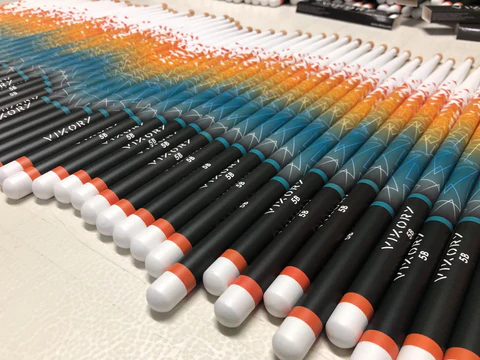
At Vikory, we’re big fans of hickory, but we realized that most major brands weren’t fully exploiting its potential. So we created our own hickory chopsticks using a very specific process. To find out more, click here.